

A business can generate strong revenue and still struggle to produce healthy profits. High sales numbers do not necessarily indicate that a company is operating efficiently or keeping enough money after covering the costs required to generate those sales. For example, revenue may increase by 15% while labor, materials, overhead, and other expenses increase by 20%. In that case, the business is growing but becoming less profitable. Understanding the company’s cost structure helps owners see where money is being spent and which expenses are having the greatest effect on margins.
A cost structure provides a clearer picture of how different expenses support the business. By examining fixed costs, variable costs, direct costs, and indirect expenses, leaders can identify necessary spending, rising costs, and potential inefficiencies. This analysis can also show whether individual products, services, customers, or projects are actually profitable. A high-revenue customer or service, for example, may produce a relatively low margin if it requires excessive labor, discounts, materials, or support.
Understanding costs also makes financial decisions more strategic. Business owners can use cost information to improve pricing, control unnecessary spending, streamline operations, and evaluate potential investments. Rather than simply trying to increase sales or reduce expenses, they can focus on activities that generate the strongest returns and support sustainable profitability.
Key Takeaways
- Cost structure shows where revenue is being consumed by expenses. It helps owners understand how much revenue remains after the costs required to generate it.
- Separating fixed, variable, direct, and indirect costs improves profitability analysis. Understanding how different expenses behave makes it easier to anticipate the financial effect of changing sales or operations.
- Cost analysis can reveal the most profitable products, services, customers, or projects. Revenue alone does not show which areas contribute the most to the bottom line.
- Better cost visibility supports smarter pricing. Businesses can evaluate whether prices adequately cover the resources required to deliver products or services and generate a sustainable margin.
- Reducing unnecessary spending can improve margins without increasing sales. Eliminating unused subscriptions, addressing inefficiencies, or renegotiating supplier costs can improve profitability while revenue remains unchanged.
- Regular cost monitoring helps identify margin problems early. Small increases in labor, materials, technology, or overhead can gradually reduce profitability if they are not monitored.
- Understanding costs supports better growth decisions. Owners can evaluate whether hiring, technology, equipment, new locations, or other investments are likely to generate enough additional profit to justify their costs.
- The goal is not simply to spend less. Effective cost management means directing resources toward activities that create value while limiting spending that does not provide an adequate return.
Understand What Your Cost Structure Includes

Your cost structure is the combination of expenses required to operate your business and generate revenue. These costs can vary significantly depending on the company’s industry, business model, size, and stage of growth. A company that sells physical products, for example, will generally have a different cost structure from a consulting firm that primarily sells professional expertise.
Understanding your cost structure means going beyond simply knowing how much the company spends each month. Business owners should understand what they are spending, why they are spending it, and how each cost affects profitability. This makes it easier to identify expenses that are necessary, costs that could be reduced, and areas where spending may not be producing enough value.
For example, a professional services company may have a cost structure dominated by employee compensation, software, office expenses, insurance, and subcontractors. A manufacturer may have substantial spending on raw materials, production labor, equipment, warehousing, utilities, and shipping. A retail business may have significant inventory, rent, staffing, payment processing, and logistics expenses.
Two companies with identical revenue can therefore have very different levels of profitability depending on how their costs are structured.
Fixed Costs
Fixed costs generally remain relatively stable over a specific period regardless of changes in sales volume. Although some fixed costs can change over time, they typically do not increase or decrease directly with every additional sale.
Common examples include:
- Rent
- Salaried administrative employees
- Insurance
- Equipment leases
- Certain software subscriptions
- Professional fees
- Property taxes
Fixed costs are important because they generally must be covered even when sales decline. A business may have to continue paying rent, insurance, software subscriptions, and salaried employees during a slow month.
This means businesses with a high proportion of fixed costs may need sufficient revenue volume to cover their baseline expenses before generating significant profit.
Variable Costs
Variable costs tend to change as production, sales, or service activity changes. As the business sells more products or completes more projects, these expenses may increase.
Examples may include:
- Raw materials
- Product packaging
- Sales commissions
- Transaction fees
- Shipping
- Certain hourly labor
- Production supplies
Understanding variable costs is particularly important when evaluating the profitability of additional sales. A business may increase revenue substantially, but if variable costs rise almost as quickly, the additional revenue may contribute relatively little to profit.
For example, if a company earns an additional $10,000 in sales but must spend $7,500 on materials, labor, shipping, and transaction costs to generate those sales, only $2,500 remains before considering other expenses.
Direct And Indirect Costs
Costs can also be categorized based on whether they can be directly associated with a particular product, service, project, or customer.
Direct costs may include materials, project-specific labor, or subcontractors. If a contractor spends $5,000 on materials for a specific customer project, that expense can generally be connected directly to that project.
Indirect costs support the broader operation and may not be easily assigned to one particular product or customer. These may include administrative salaries, office rent, accounting, general insurance, and technology used across the organization.
This distinction helps businesses determine the true cost of delivering individual products or services. It also makes it easier to identify which offerings are producing healthy margins and which may be consuming more resources than expected.
See Where Your Gross Margin Is Being Lost
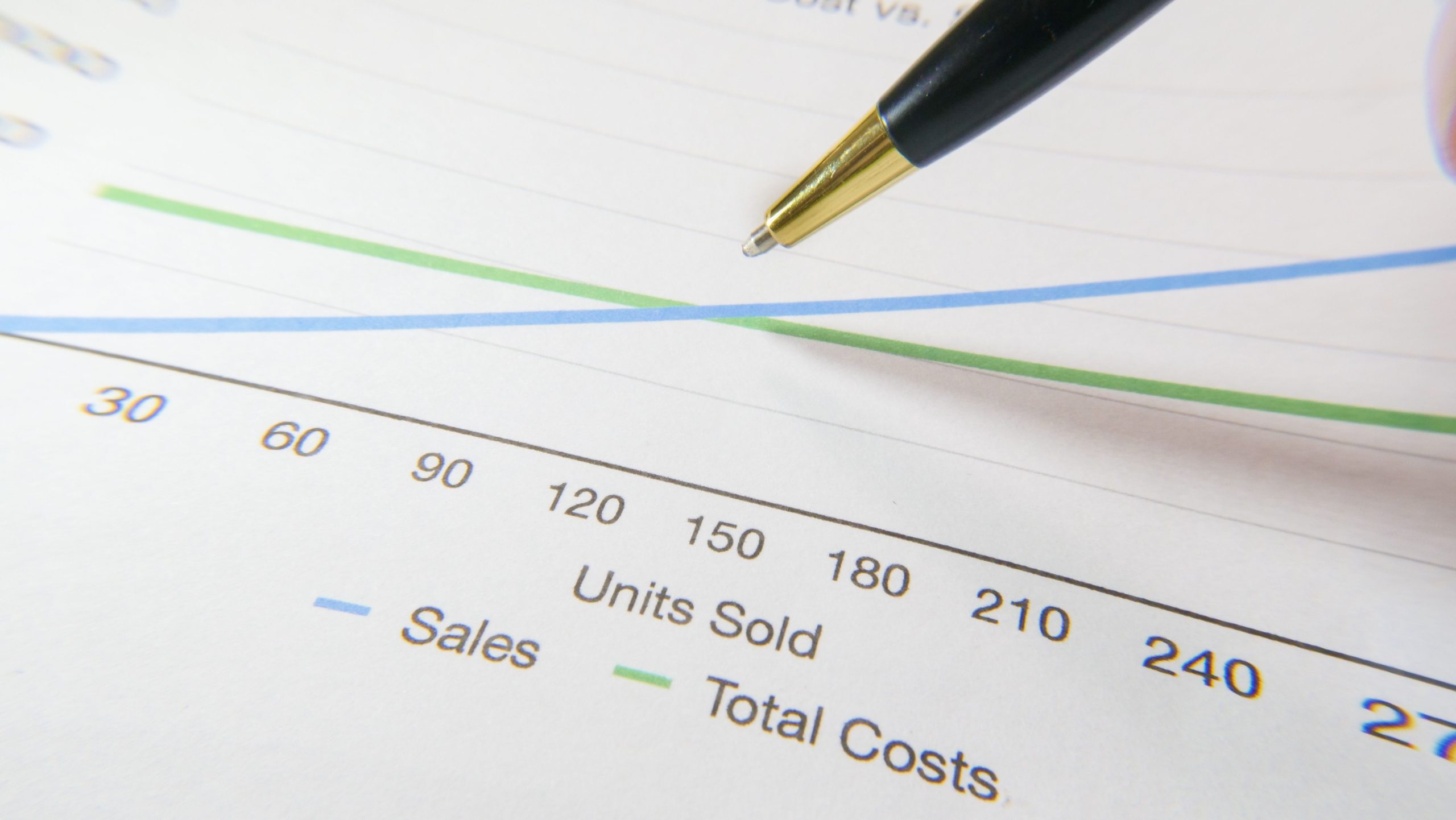
One of the most important benefits of understanding cost structure is gaining better visibility into gross margin.
Gross margin represents the amount remaining after subtracting the direct costs associated with generating revenue. It provides an important indication of how efficiently a business turns sales into gross profit before accounting for broader operating expenses.
A simplified formula is:
Gross Profit = Revenue − Cost of Goods Sold (COGS)
The gross margin percentage can then be calculated as:
Gross Margin % = Gross Profit ÷ Revenue × 100
For example, suppose a company generates $500,000 in revenue and has $300,000 in direct costs.
Its gross profit is:
$500,000 − $300,000 = $200,000
Its gross margin is:
$200,000 ÷ $500,000 = 40%
This means the company retains $0.40 of each dollar of revenue after covering its direct costs.
Why Gross Margin Matters
A declining gross margin can indicate that costs are increasing faster than prices or revenue. Even if sales continue to rise, declining gross margins can eventually put pressure on overall profitability.
Possible causes include:
- Supplier price increases
- Higher labor costs
- Excessive material waste
- Underpricing
- Increased subcontractor expenses
- Inefficient production
- Higher shipping costs
- Discounts that are too aggressive
Without a clear understanding of the cost structure, these problems can be difficult to identify. A business may simply see that its overall profit is declining. Cost analysis can reveal whether the problem originates with pricing, direct costs, overhead, or a combination of factors. For example, if material costs increased significantly but selling prices remained unchanged, gross margin may decline even though sales volume remains strong. If labor hours per project have increased, the problem may instead involve productivity or operational efficiency.
Analyze Margins By Product Or Service
Looking only at company-wide gross margin can hide important differences.
For example, a company may sell three services:
- Service A: 55% gross margin
- Service B: 35% gross margin
- Service C: 15% gross margin
If all three services generate similar revenue, Service C may consume substantially more resources while producing much less profit.
Breaking down costs by product or service allows management to determine where the strongest margins are being generated. This information can influence pricing, marketing, staffing, service design, and resource allocation.
It can also reveal opportunities to improve lower-margin offerings rather than automatically eliminating them. A service with a weak margin may become more profitable after adjusting its price, reducing delivery time, changing the process, or controlling associated costs.
Improve Pricing Decisions
Understanding your cost structure provides a stronger foundation for pricing. Businesses sometimes set prices based primarily on what competitors charge, what customers appear willing to pay, or what the owner believes is reasonable. While market conditions and customer expectations matter, pricing without understanding costs can create serious margin problems. A price that attracts customers is not necessarily a profitable price.
Know Your Minimum Profitable Price
A business should understand the costs associated with delivering its products or services before determining how much it needs to charge.
For a service business, this might include:
- Employee wages
- Payroll taxes and benefits
- Contractor expenses
- Software
- Travel
- Materials
- Administrative support
- Customer service
- Sales and marketing expenses
The goal is not necessarily to assign every overhead expense directly to every transaction. Instead, management should understand the overall cost required to sustain the business and generate profitable revenue.
This information gives owners a better basis for determining pricing thresholds and evaluating whether certain contracts or projects are worth accepting.
Avoid Underpricing
Underpricing can create the illusion of growth. For example, a company might win more customers after reducing its prices. Revenue increases, but the additional work may require more employees, materials, overtime, or subcontractors. If the price reduction is greater than the savings generated by increased volume, margins may deteriorate.
A business could therefore become busier without becoming substantially more profitable. Understanding costs allows owners to evaluate whether a proposed discount or price reduction is financially sustainable. It also helps them determine whether additional volume will actually generate enough contribution to justify the resources required.
Evaluate Price Increases More Effectively
Cost information can also support reasonable price increases. If labor, materials, insurance, technology, or supplier costs have increased, maintaining the same price may gradually reduce margins.
Instead of waiting until profitability becomes a problem, businesses can monitor cost changes and determine when pricing needs to be adjusted. Price increases can then be based on actual changes in the economics of delivering the product or service rather than being made only after margins have already deteriorated.
Identify Unnecessary And Inefficient Spending
Not every expense contributes equally to business performance. Some costs are necessary to deliver products and services. Others support the company’s infrastructure. Some may have been useful when the business was smaller, but they no longer provide enough value to justify their current cost.
Understanding the cost structure makes these differences easier to identify. A business may discover, for example, that it is paying for multiple software platforms with overlapping functions or maintaining services that employees rarely use. Individually, these expenses may seem minor, but together they can create high annual costs.
Look For Expense Creep
Expense creep occurs when small increases in spending accumulate over time.
Examples include:
- Additional software subscriptions
- Increasing insurance premiums
- Unused memberships
- Higher banking fees
- Office expenses
- Unnecessary services
- Duplicate technology
- Increasing administrative costs
Each individual expense may appear insignificant. Collectively, however, they can reduce margins. A periodic cost review can help identify expenses that should be eliminated, renegotiated, consolidated, or monitored more closely.
Businesses should also pay attention to recurring expenses. One-time purchases are usually visible when they occur, while recurring charges can continue for months or years without receiving the same level of scrutiny.
Measure Cost Efficiency
Cost analysis should not focus exclusively on cutting expenses. The more important question is whether the business is receiving an appropriate return from what it spends. For example, reducing payroll may lower expenses, but eliminating employees who perform critical revenue-generating work could negatively affect customer service and sales.
Similarly, purchasing cheaper materials could reduce direct costs while increasing defects, returns, or customer complaints. The goal should be efficient spending rather than simply lower spending.
A slightly more expensive resource may actually be more economical if it improves productivity, reduces errors, saves employee time, or increases customer retention.
Improve Operational Efficiency
Cost structure analysis can reveal operational problems that may not be obvious from a traditional income statement. If labor costs are consistently higher than expected, for example, the issue may not simply be that employees are expensive. The underlying problem could involve inefficient workflows, excessive overtime, scheduling problems, rework, training gaps, or poor resource allocation. Looking at costs alongside operational activity helps businesses investigate the reasons behind financial changes.
Track Costs Against Activity
Businesses can gain useful insights by comparing costs against operational measures.
Depending on the company, these may include:
- Cost per customer
- Cost per project
- Labor hours per job
- Cost per unit produced
- Revenue per employee
- Shipping cost per order
- Material cost per unit
- Customer acquisition cost
- Service delivery cost
These measurements help management understand whether efficiency is improving or deteriorating. For example, if revenue remains stable but labor hours per project increase, the company may be experiencing declining productivity. If shipping costs per order rise, management may need to review carriers, order sizes, delivery routes, or fulfillment processes.
Find The Source Of Rising Costs
Suppose a business notices that labor costs increased by 12% over a year. That number alone does not explain the problem.
Management could investigate:
- Did employee wages increase?
- Did overtime increase?
- Did staffing levels increase?
- Did productivity decline?
- Did sales volume increase?
- Did projects require more labor hours?
- Did rework or errors increase?
This type of analysis turns financial information into an operational management tool. Instead of simply concluding that labor costs are too high, management can determine what is driving the increase and address the underlying cause.
Make Better Decisions About Growth

Growth can improve profitability, but growth can also create additional costs. A business may need to hire employees, purchase equipment, lease additional space, increase inventory, expand technology, or add administrative support as revenue grows. Understanding the cost structure helps owners determine whether the expected revenue from expansion is sufficient to justify the additional expense.
Understand Operating Leverage
Operating leverage describes how much a company’s cost structure depends on fixed costs.
A business with high fixed costs may experience significant increases in profit when revenue grows because those fixed costs do not increase proportionally with every additional sale.
However, the same structure can create pressure when revenue falls because the business must continue paying those fixed expenses.
For example, adding a new facility may provide capacity for substantial growth. But if demand does not materialize, the additional rent, utilities, maintenance, insurance, and staffing expenses can put pressure on margins.
This is why growth decisions should consider both the additional revenue expected and the additional cost required to support that revenue.
Model Growth Before Committing Resources
Before making a major investment, businesses can model different scenarios.
For example:
Scenario 1: Conservative Growth
Revenue increases 5%, while operating costs increase 3%.
Scenario 2: Expected Growth
Revenue increases 12%, while operating costs increase 8%.
Scenario 3: Aggressive Growth
Revenue increases by 20%, while operating costs increase by 18%.
Comparing these scenarios helps management understand how changes in revenue and costs could affect profitability.
Scenario planning can also reveal how much additional sales volume is needed to cover a new employee, facility, equipment purchase, or technology investment. This can reduce the risk of making growth decisions based solely on optimistic revenue projections.
Monitor Margins And Costs Regularly
Understanding your cost structure is not a one-time exercise. Costs change as the business grows, suppliers adjust pricing, employees receive raises, technology changes, customers shift their purchasing behavior, and operating conditions evolve.
Regular monitoring helps management identify changes before they have a significant effect on profitability. A cost structure that was appropriate two years ago may no longer be efficient today. New products, employees, suppliers, locations, and systems can all change the economics of the business.
Establish Key Cost And Margin Metrics
Businesses can monitor metrics such as:
- Gross margin percentage
- Operating margin
- Labor cost as a percentage of revenue
- Material costs as a percentage of sales
- Overhead as a percentage of revenue
- Cost per customer
- Cost per project
- Revenue per employee
- Average transaction value
- Contribution margin
The appropriate metrics depend on the company’s business model. The goal is to focus on measurements that provide meaningful information about profitability and operational performance rather than tracking every possible number.
Compare Actual Results With Expectations
Budgeting and forecasting become more useful when actual results are compared against expectations.
If a business expected labor to represent 20% of revenue but the actual figure reaches 25%, management can investigate the difference.
The same principle applies to materials, marketing, technology, rent, and other significant expenses.
Variance analysis can help answer important questions:
- What changed?
- Why did it change?
- Is the change temporary or permanent?
- Does management need to take action?
- Will the change affect future margins?
Identifying these differences early gives owners more time to respond.
Use Cost Information To Make Decisions
The ultimate purpose of cost analysis is not to create more spreadsheets. It is to improve decision-making.
Cost information can help business owners determine whether to:
- Raise prices
- Change suppliers
- Adjust staffing
- Eliminate unnecessary expenses
- Modify product offerings
- Change service packages
- Invest in technology
- Improve processes
- Focus on higher-margin customers
- Discontinue unprofitable products or services
When cost information is connected to business decisions, financial management becomes more proactive. Instead of reacting after profits decline, owners can use financial and operational data to identify potential problems and opportunities earlier.
How Clear Cost Visibility Can Support Better Margins
Improving margins is not always about generating more revenue. In many cases, businesses can improve profitability by understanding how existing revenue is being converted into profit.
A company that knows its cost structure can identify which expenses are essential, which costs are increasing, and which revenue streams generate the strongest contribution to the bottom line. This creates a stronger foundation for decisions involving pricing, staffing, suppliers, operations, and growth.
Clear Action Business Advisors can help business owners take a closer look at the financial information behind their operations and use that information to support better decisions. A clearer understanding of costs can make it easier to identify opportunities for improving efficiency, strengthening margins, and building a more financially sustainable business.
Conclusion
Understanding your cost structure gives you a more complete view of how your business makes money and where profitability may be slipping away. Revenue tells you how much the business sells, but cost analysis helps explain how much of that revenue remains after the expenses required to generate it.
By separating fixed and variable costs, analyzing direct and indirect expenses, evaluating margins by product or service, reviewing pricing, identifying inefficient spending, and monitoring costs regularly, business owners can make more informed financial decisions. The goal is not simply to reduce expenses. It is to ensure that the money the business spends supports productive activity and contributes to sustainable profitability.
When cost structure is understood and monitored consistently, owners have better information for managing growth, setting prices, allocating resources, and protecting margins. That visibility can turn financial data into a practical tool for improving the overall health of the business.
Frequently Asked Questions
1. What Is A Cost Structure In Business?
A cost structure is the combination of expenses a business incurs to operate and generate revenue. It can include fixed costs, variable costs, direct costs, and indirect costs.
2. How Does Cost Structure Affect Profit Margins?
Cost structure directly affects margins because expenses reduce the amount of revenue that remains as gross or operating profit. Understanding which costs are increasing can help businesses identify ways to improve profitability.
3. What Is The Difference Between Fixed And Variable Costs?
Fixed costs generally remain relatively stable over a particular period regardless of sales volume, while variable costs typically change as production or sales activity changes.
4. Can Understanding Costs Help With Pricing?
Yes. Knowing the costs associated with delivering a product or service helps businesses evaluate whether their prices provide enough margin to support operations and generate a sustainable profit.
5. Should Businesses Focus Only On Reducing Costs To Improve Margins?
No. Cost reduction is only one approach. Businesses can also improve margins through better pricing, higher productivity, improved processes, better resource allocation, and focusing on products or services with stronger contribution margins.
6. How Often Should A Business Review Its Cost Structure?
The appropriate frequency depends on the business, but high costs and key margin indicators should generally be monitored regularly. More frequent reviews can be especially useful when costs, sales volume, or operating conditions are changing quickly.
7. How Can Cost Analysis Help A Growing Business?
Cost analysis can help a growing business determine whether additional revenue is generating enough profit to justify the resources required to achieve that growth. It can also help owners anticipate staffing, technology, inventory, facility, and other expenses associated with expansion.
8. What Is The Relationship Between Cost Structure And Cash Flow?
Cost structure affects cash flow because operating expenses, supplier payments, payroll, equipment costs, and other expenditures require cash. Understanding when and why costs occur can help businesses better plan their cash requirements while protecting profitability.


